National Financial Educator Standards and Financial Literacy Standards in Canada

Advancing Educator Competency to Improve Financial Literacy Outcomes

The NFEC created a comprehensive set of standards designed to help financial educators elevate both the quality and effectiveness of financial literacy instruction. These standards outline the essential knowledge instructors should possess across key personal finance topics, along with proven strategies for delivering instruction in ways that resonate and drive meaningful learning outcomes.

The goal was to establish clear, accessible financial literacy standards that educators and organizations can use as a practical framework to strengthen financial capability and improve the long-term success of their programs. Recognized as the first and only standards developed specifically for Canadian financial educators, they offer a consistent benchmark for excellence in the field.

Research indicates that learners taught by well-qualified instructors experience stronger knowledge retention, increased lifetime earning potential, enhanced retirement readiness, and overall improvements in well-being. In contrast, students guided by less-prepared educators tend to see fewer positive results. Those learning from highly trained professionals are more likely to achieve favorable financial and life outcomes, including better long-term financial security and improved mental and physical health.

Accredited & Independent

As the only Accredited Provider in the financial education sphere to set industry standards for financial instructors in Canada, the NFEC establishes the guideline for excellence in teaching personal finance. Our standards reflect the demonstrated best practices for educators – including educational design, learner-focused pedagogy, measurable results, and ethical practice – so organizations and learners can rest assured in the quality of instruction being delivered.

It’s important to mention that the NFEC developed these standards independently. No outside funding or sponsor shaped content or priorities. Because we are independent, our standards are motivated exclusively to produce real learning and behavior change. They are clear, defensible, and focused on achieving impact for individuals, employers, and whole communities.

Standards for Financial Education Practitioners – Framework for Teaching Personal Finance

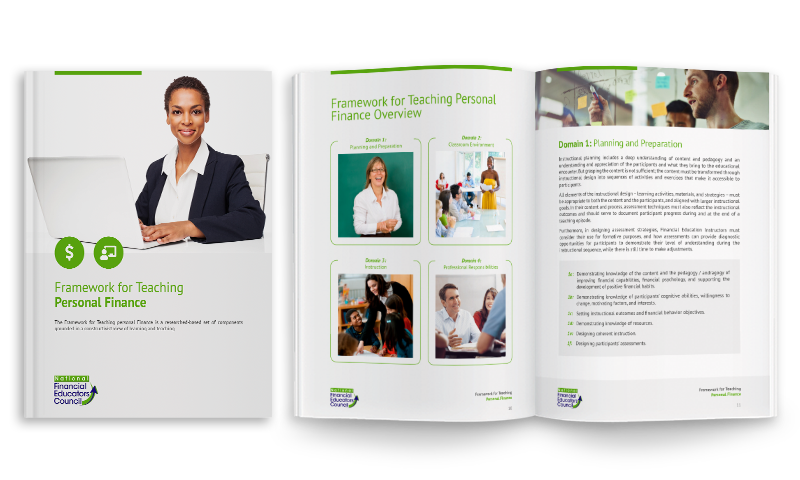
The NFEC introduced the Framework for Teaching Personal Finance, a comprehensive set of international standards designed specifically for financial education instructors. This Framework outlines clear, actionable guidelines that support educators to deliver more effective instruction while helping learners build practical money management skills they can apply in everyday life.

Developed in partnership with the Danielson Group and a cross-disciplinary team of experts in education, psychology, finance, and evaluation, the Framework aligns with the InTASC core teaching standards. It adapts Charlotte Danielson’s well-established instructional model to the context of financial literacy, using a constructivist approach to learning. The result is a structured system of 22 research-based components that define the essential knowledge, skills, and observable teaching practices educators are expected to demonstrate. These components offer a clear pathway for implementing instructional strategies that lead to measurable improvements in learner outcomes.

Widely recognized and supported by educators, administrators, and policymakers, the Danielson Framework remains the most widely used teaching model in the United States, with adoption across more than 20 states. By tailoring this proven model to financial education, the NFEC provides a rigorous, standards-based approach that enhances instructional quality and enables programs to clearly demonstrate their impact on participants.

Certification Tour, Graduate Features, & Bonus Presentation Resources

  • CFEI® Tour: See how the program works and explore the journey step by step.

  • Graduate Features: Hear real stories from instructors making an impact.

  • Bonus Resources: Get exclusive teaching tools to elevate your financial education programs.

This is more than a course – it’s your opportunity to join a global network of educators committed to empowering individuals and communities with practical, life-changing financial skills.

By accessing the NFEC’s material, you agree to comply with the full terms.

Join Over 5,000 Enrolled CFEI® Champions Providing Others Qualified Financial Education

The NFEC Provides Standards for Financial Educators – The Groups Below Provide Standards for Learners

NFEC educator standards work in conjunction with student learning benchmarks by ensuring that instructors are competent to deliver content aligned with defined financial competencies and measurable outcomes. Together, they create a comprehensive system that directly connects teaching quality with learner achievement.

National Financial Literacy Strategy (2021–2026)

Lead organization:
Financial Consumer Agency of Canada (FCAC)

A nationwide framework guiding Canada’s financial education ecosystem. This strategy sets priorities for improving access, inclusivity, and effectiveness of financial education programs. While not legislation, it functions as a central financial literacy standards framework by aligning stakeholders around measurable outcomes and behavior-focused learning goals.

National Strategy for Financial Literacy (2015–2020)

Lead organization:
Financial Consumer Agency of Canada (FCAC)

Description:
Canada’s first coordinated national effort to improve financial capability. It established core goals – managing money, planning for the future, and protecting against fraud – serving as an early benchmark for national financial education standards and program alignment across sectors.

Financial Consumer Agency of Canada Act

Lead organization:
Government of Canada

Description:
Federal legislation that created the FCAC and expanded its mandate to include financial literacy. This law underpins Canada’s financial education infrastructure and supports the development of national financial literacy standards and consumer education initiatives.

Financial Literacy Leader Initiative (2014–2019)

Lead organization:
Financial Consumer Agency of Canada (FCAC)

Description:
A federal leadership role established to coordinate stakeholders and advance financial literacy nationwide. It helped unify efforts and contributed to the development of consistent financial education standards across public and private sectors.

FCAC Measurement Plan & National Strategy Dashboard

Lead organization:
Financial Consumer Agency of Canada (FCAC)

Description:
A structured system for evaluating financial literacy initiatives across Canada. It provides metrics and benchmarking tools that function as operational financial literacy standards, enabling organizations to measure impact and align with national goals.

Financial Literacy Month (Canada)

Lead organization:
Financial Consumer Agency of Canada (FCAC)

Description:
An annual national initiative each November that promotes financial education through coordinated campaigns and resources. While not legislation, it supports consistent messaging and reinforces national financial education standards through public engagement.

Provincial Financial Literacy Curriculum Requirements (e.g., Ontario)

Ontario, Canada

Lead organization:
Provincial Ministries of Education

Description:
Several provinces mandate financial literacy within school curricula (e.g., Ontario integrates it into math and social studies). These requirements act as regional financial literacy standards, ensuring students gain foundational money management skills.

Ontario Financial Literacy Strategy

Ontario, Canada

Lead organization:
Government of Ontario

Description:
A provincial strategy aimed at embedding financial literacy into education and community programs. It aligns with broader national efforts and contributes to a cohesive system of financial education standards at the provincial level.

British Columbia Financial Literacy Framework

British Columbia, Canada

Lead organization:
BC Ministry of Education

Description:
A structured curriculum framework integrating financial literacy into K-12 education. It outlines competencies and learning outcomes, effectively functioning as formal financial literacy standards within the province.

Canadian Financial Capability Survey (CFCS)

Lead organization:
Financial Consumer Agency of Canada (FCAC)

Description:
A national research initiative that informs policy and program design. While not a regulation, it provides the evidence base used to shape financial education standards and evaluate financial literacy levels across the population.

Workplace Financial Wellness Initiatives (FCAC Guidance)

Lead organization:
Financial Consumer Agency of Canada (FCAC)

Description:
Guidelines and resources encouraging employers to deliver financial education programs. These initiatives promote consistent delivery models and align with national financial literacy standards for adult learners.

Consumer Protection Framework (Bank Act Amendments – Financial Literacy Components)

Lead organization:
Government of Canada

Description:
Amendments to federal banking legislation include enhanced disclosure and consumer protection measures. These indirectly support financial literacy by requiring clearer communication and transparency – key elements aligned with national financial education standards.