Financial Literacy Program Experience Tools, Assessments, & Tests
Effective financial education programs are built to create tangible, real-world improvements in how people manage their money. Demonstrating that impact requires going beyond simple knowledge checks – programs need to assess how learning shapes attitudes, influences behaviors, strengthens financial systems, and ultimately improves outcomes. In Canada, financial education assessments give educators and organizations a structured way to monitor participant progress and clearly show the value of their efforts.
At the same time, the learner experience plays a critical role in overall success. Programs that make a lasting difference are intentionally designed, skillfully delivered, and supported with follow-up that helps turn knowledge into sustained action. To support this process, the NFEC offers a range of adaptable tools – from planning guides and facilitation resources to measurement frameworks and reinforcement materials – enabling educators across Canada to deliver consistent, high-impact financial education.
Financial Wellness Tests & Assessments
The true purpose of a financial education program is to drive meaningful, measurable improvements that extend far beyond the learning environment. Achieving this goal requires more than simply delivering content – it calls for a deliberate approach to monitoring progress across several key areas. By examining multiple dimensions, educators can gain a clearer picture not only of what participants understand, but also how their perspectives evolve, how their habits shift, and how they apply their knowledge in real-life situations.
The NFEC’s assessment library and reporting tools are designed to help demonstrate genuine program effectiveness – not merely knowledge retention. Fully customizable, aligned with core competencies, and built to support audits, these resources evaluate learning across a range of dimensions, providing stakeholders with clear evidence of real-world impact. With 10 adaptable assessments and a robust question bank, these tools capture changes in learner attitudes, behaviors, systems, and long-term outcomes – equipping you to clearly demonstrate results. These assessment resources include targeted measures across the following areas:
Behaviors
Observable actions that support their journey to becoming effective stewards of their finances.
Systems
The routines, tools, or structures they’ve developed to support their personal finance management.
Stage of Change
Their readiness and willingness to apply what they’ve learned.
Sentiment
Their feelings, confidence, and mindset toward applying what they learned in the lessons.
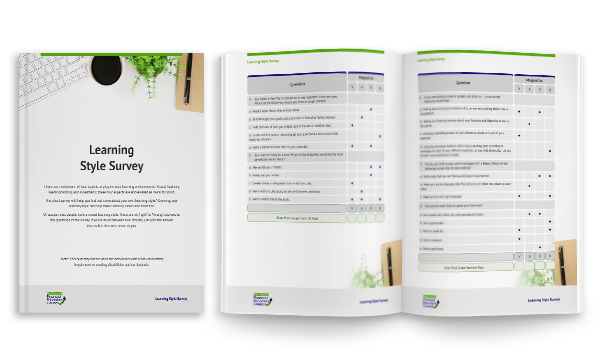
Learning Style Survey
Measure how learners prefer to receive, process, and engage with information.
Interest
Their level of engagement and motivation to learn the subject matter.
Content Knowledge
What learners understand about teaching personal finance topics. (Available with curriculum only.)
Support
The networks, resources, or people they access to help them succeed.
Actions
Specific steps learners take as a direct result of the training.
Outcomes
Real-world impact and measurable results stemming from their learning experience.


User Experience Tools
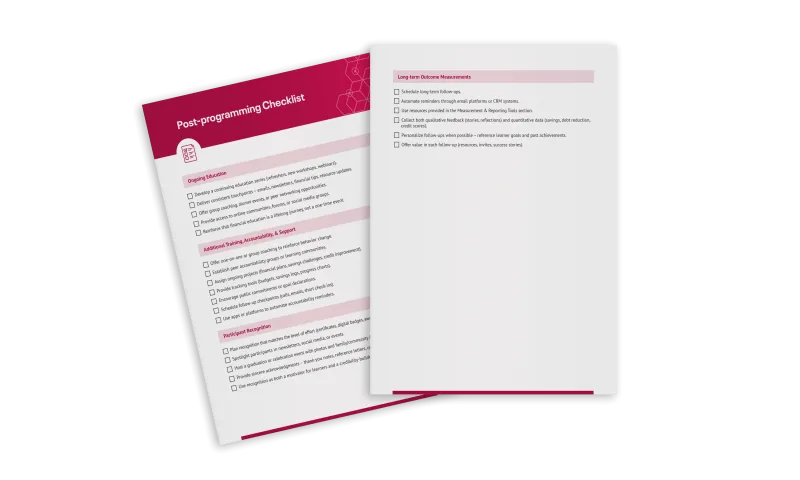
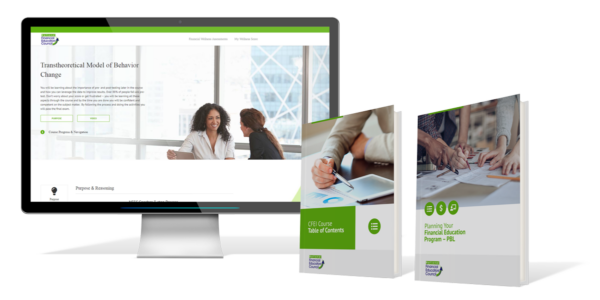
Delivering an effective financial education program takes more than solid material – it demands intentional planning, polished facilitation, and consistent reinforcement that helps learners turn insights into long term habits. To support you in offering a truly exceptional experience, we’ve built a full collection of resources that walk you through every stage, from early preparation to delivery and ongoing follow up. Each component is crafted to streamline your workload, create consistency across facilitators and locations, and ensure that every session meets professional standards with clearly defined learning goals.
All elements can be tailored to fit your organization’s brand and environment – including registration processes, facilitator guides, measurement tools, and continuing education materials – so participants receive a cohesive, high quality experience.
This all inclusive toolkit frees you to focus on what matters most: designing meaningful learning moments that strengthen knowledge, encourage positive financial behaviors, and support long term financial well being.